
Education
BPC-157 in Bali: Why Is It Harder to Find Than Semaglutide?
Published 10 Sept 2026, 21:00 Bali time
Why is BPC-157 harder to find than semaglutide in Bali? Learn how approval status, clinical evidence, regulation, and medical availability affect peptide access.
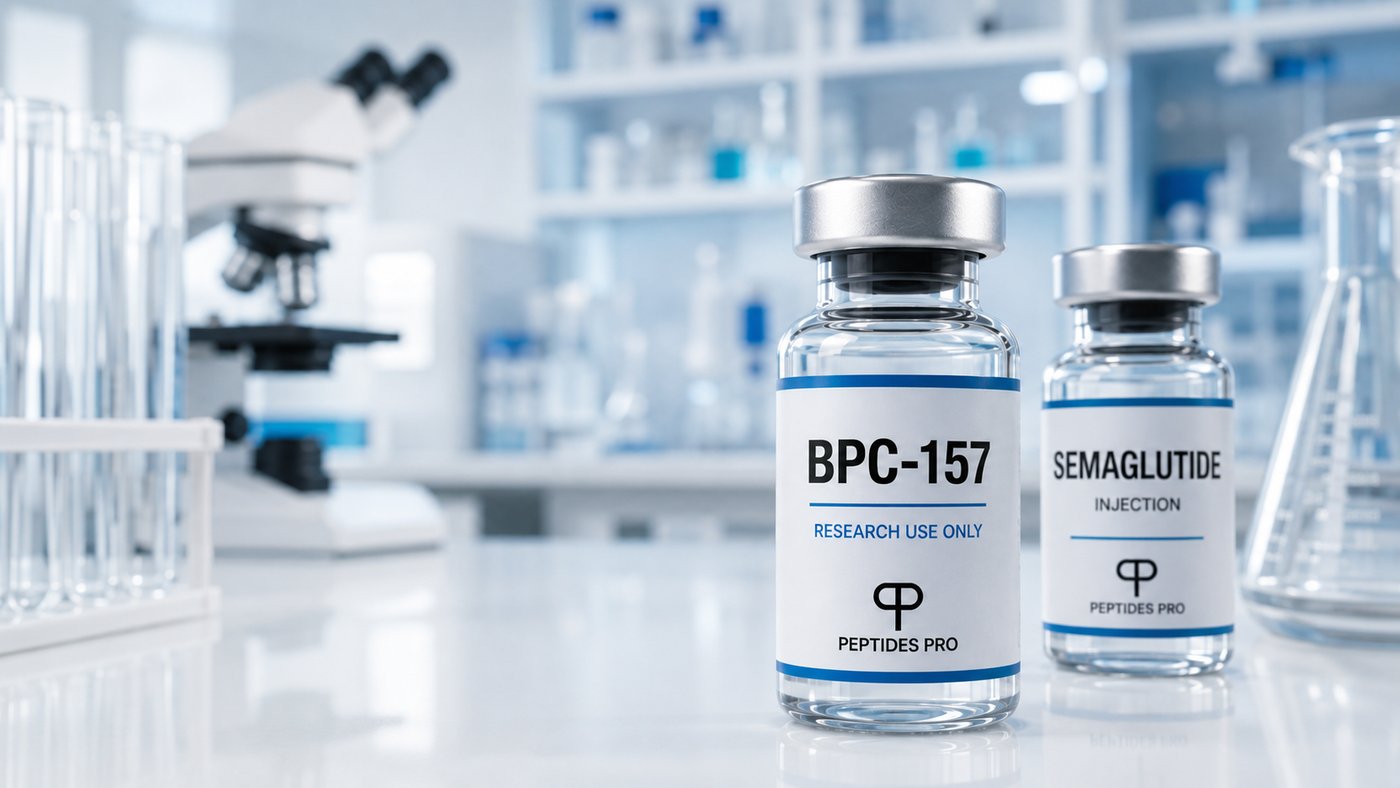
If you search for semaglutide in Bali, you are likely to encounter it through established medical, weight-management, or metabolic-health services.
Search for BPC-157, however, and the situation can look very different.
That difference is not necessarily because BPC-157 is less popular. In fact, BPC-157 has developed a strong following among people interested in recovery, sports medicine, tissue repair, and experimental peptide research.
The bigger reason is regulatory and clinical status.
Semaglutide is an established prescription medicine with regulatory approvals for specific medical uses, while BPC-157 remains an investigational peptide without an FDA-approved medical indication. That distinction affects how easily clinics can source, prescribe, store, and offer each substance.
So why is BPC-157 harder to find than semaglutide in Bali?
Because semaglutide belongs to an established pharmaceutical system, while BPC-157 largely exists in the investigational and research space.
What Is BPC-157?
BPC-157, short for Body Protection Compound-157, is a synthetic peptide consisting of 15 amino acids.
It has attracted attention primarily because of findings from laboratory and animal research investigating tissue repair, inflammation, gastrointestinal biology, blood-vessel formation, and musculoskeletal recovery.
This is where much of the excitement around BPC-157 comes from.
But there is an important distinction between interesting biological research and proven medical treatment.
A 2025 systematic review in orthopaedic sports medicine found that much of the available evidence remained preclinical and concluded that human clinical safety data were still lacking.
PubMed: BPC-157 systematic review
That means the scientific conversation around BPC-157 is still very different from the conversation around an established pharmaceutical such as semaglutide.
Why Is Semaglutide Easier to Find?
Semaglutide is part of a completely different regulatory category.
It is a GLP-1 receptor agonist that has been developed, tested, manufactured, and regulated as a pharmaceutical medicine.
The U.S. FDA has approved semaglutide products for specific indications, including diabetes and chronic weight management.
This creates something BPC-157 currently does not have: an established pharmaceutical pathway.
There are approved manufacturers, standardized formulations, prescribing information, clinical trial programs, pharmacies, regulatory oversight, and established medical indications.
That infrastructure makes a major difference in availability.
BPC-157 Does Not Have the Same Pharmaceutical Infrastructure
This is probably the most important point.
BPC-157 is not simply a less popular version of semaglutide.
It is a substance at a very different stage of development.
The FDA has stated that it has identified limited safety information for BPC-157 and has raised concerns about potential immunogenicity and peptide-related impurities when considering compounded versions.
FDA: BPC-157 and compounded drug safety concerns
A recent review of BPC-157's development also described the peptide as pharmaceutically underdeveloped, noting the absence of an approved formulation, validated dosing regimen, and completed Phase II clinical trial.
PubMed: BPC-157 development review
That helps explain why a legitimate clinic may be comfortable discussing semaglutide while being much more cautious about BPC-157.
The Human Evidence Is Still Small
This is another major reason.
BPC-157 has generated an enormous amount of interest online, but the amount of high-quality human research is much smaller than the amount of online discussion might suggest.
A 2025 systematic review identified only a very limited human evidence base.
PubMed: 2025 BPC-157 systematic review
One small 2025 pilot study investigated intravenous BPC-157 in only two healthy adults. The researchers reported that the participants tolerated the infusions without observed adverse effects, but they also emphasized the need for future research to confirm safety.
PubMed: Human BPC-157 pilot study
That is interesting research.
But two people are not enough to establish that a treatment is safe or effective for a broad population.
This is one of the biggest differences between scientific interest and clinical acceptance.
What Do Doctors Say About BPC-157?
The medical community is not simply divided into people who believe BPC-157 works and people who believe it does not.
The more important question is:
How strong is the evidence?
Daniel M. Cushman, MD, a professor of physical medicine and rehabilitation at the University of Utah Health, has emphasized how little human evidence exists for unapproved peptides. The Association of American Medical Colleges reported his assessment that there is "very little human data" supporting benefits from unapproved peptides.
AAMC: Questions to ask your doctor about peptides
Orthopedic surgeon Jonathan Streit, MD, similarly describes BPC-157 as an interesting investigational peptide while emphasizing that stronger human clinical evidence is still needed before it can be considered an established therapy.
Another physician, Edwin Lee, MD, has been involved in some of the small human BPC-157 studies. His work illustrates why the peptide remains scientifically interesting, while also highlighting how much more research is needed before broad clinical conclusions can be made.
The important distinction is this:
Doctors can be interested in a peptide without the medical establishment considering it an established treatment.
So Why Would a Bali Clinic Offer Semaglutide but Not BPC-157?
Because a clinic has to consider more than whether customers are asking for something.
A legitimate medical provider has to consider:
- Whether the substance is approved or otherwise legally available
- Whether a recognized pharmaceutical product exists
- Whether there is adequate clinical evidence
- Whether the product has reliable manufacturing standards
- Whether the physician can justify its use
- Whether the product can be sourced through appropriate pharmaceutical channels
- Whether local regulations permit its supply
Semaglutide has an established medical framework behind it.
BPC-157 does not have the same framework.
This does not automatically mean that every BPC-157 product encountered in Bali is fake.
It does mean that availability alone should never be interpreted as proof of regulatory approval, pharmaceutical quality, or clinical effectiveness.
Bali's Peptide Market Adds Another Layer
Bali has become a major destination for wellness, longevity, aesthetics, sports recovery, and medical tourism.
That means visitors can encounter a wide variety of products and services that may not be equally regulated.
Indonesia's drug regulator, BPOM, has specifically warned about the online distribution of hard drugs and describes active monitoring of medicines sold through marketplaces, social media, and websites.
Indonesia BPOM: Online distribution of medicines
For consumers, this creates an important distinction:
A product being advertised in Bali does not automatically mean it is an approved medicine in Indonesia.
The same applies to products advertised as "research peptides."
The words research use only do not transform an unapproved substance into an approved medical treatment.
Why BPC-157 Can Be More Difficult to Source
There are several overlapping reasons.
1. It is not an established prescription medicine
BPC-157 does not have the same approved pharmaceutical status as semaglutide.
2. There is limited human clinical evidence
Most BPC-157 research remains preclinical, with only a small number of human studies available.
PubMed: BPC-157 systematic review
3. Product quality is a concern
With unapproved peptide products, the issue isn't only whether the molecule itself has biological activity.
There are also questions about:
- Purity
- Identity
- Sterility
- Contamination
- Stability
- Manufacturing consistency
- Actual contents of the product
The FDA has specifically raised concerns about peptide impurities and immunogenicity in the context of compounded BPC-157.
4. Medical liability is different
A physician prescribing an established medicine with a large clinical evidence base is operating within a very different environment from one offering an investigational peptide.
5. Availability does not equal legitimacy
A website, social media account, or clinic advertising BPC-157 does not automatically establish that the product is approved, pharmaceutical-grade, or clinically validated.
Does That Mean BPC-157 Is Fake?
No.
That would be an oversimplification.
There is genuine scientific research surrounding BPC-157.
Animal and laboratory studies have produced findings interesting enough to justify continued investigation, particularly around tissue repair, inflammatory pathways, vascular biology, and musculoskeletal research.
The problem is that the human evidence has not caught up with the popularity of the peptide.
That is a very different statement from saying that BPC-157 does nothing.
Science sometimes starts with promising laboratory findings and eventually develops into an effective medicine.
But until that process is completed, researchers and consumers have to distinguish between potential and proven clinical benefit.
What About Athletes?
There is another reason people should pay attention to BPC-157's regulatory status.
BPC-157 is included on the World Anti-Doping Agency's prohibited list as a non-approved substance.
World Anti-Doping Agency: Prohibited List
That means competitive athletes subject to anti-doping rules need to be particularly careful.
Someone may think of BPC-157 simply as a "recovery peptide," while their sporting organization may classify it very differently.
For athletes, checking the current rules of the relevant anti-doping organization is essential.
What Should Someone in Bali Look For?
If a Bali clinic is offering BPC-157, the most useful questions aren't simply:
"Do you have BPC-157?"
A better set of questions is:
What exactly is the product?
Is it an approved medicine in Indonesia?
Who is the prescribing physician?
Where was the product manufactured?
How is its identity and purity verified?
Is there a legitimate pharmacy or pharmaceutical supplier involved?
What clinical evidence supports the proposed use?
What are the known risks and uncertainties?
These questions are much more valuable than simply asking whether a vial is available.
BPC-157 vs Semaglutide: The Real Difference
| BPC-157 | Semaglutide | |
|---|---|---|
| Medical status | Investigational / unapproved | Approved medicine for specific indications |
| Main research interest | Tissue repair, inflammation, musculoskeletal research | Diabetes and weight management |
| Human evidence | Limited | Extensive clinical development |
| Standardized pharmaceutical products | Limited / jurisdiction-dependent | Established |
| Regulatory infrastructure | Limited | Extensive |
| Online marketing | Common | Common |
| Evidence behind routine medical use | Insufficient | Established for approved indications |
The key difference isn't that one is a "better peptide."
They are fundamentally different products at different stages of medical development.
The Bottom Line
BPC-157 is harder to find than semaglutide in Bali mainly because it does not have the same regulatory approval, pharmaceutical infrastructure, and clinical evidence base.
Semaglutide has moved through the conventional pharmaceutical development process and is an approved prescription medicine for specific medical uses.
BPC-157 remains an investigational peptide with promising preclinical research but limited human evidence and significant regulatory uncertainty.
That doesn't mean every BPC-157 product is necessarily counterfeit, nor does it mean the scientific interest surrounding the peptide is meaningless.
It means consumers should be much more careful about confusing availability with approval and research interest with established treatment.
For anyone exploring peptides in Bali, the most important question isn't simply:
"Can I find it?"
It's:
"What is it, where did it come from, what evidence supports it, and what regulatory framework applies to it?"
Medical Disclaimer
> Disclaimer: This article is for educational and informational purposes only. BPC-157 is an investigational peptide and should not be considered an FDA-approved treatment for any medical condition. The information above does not constitute medical advice, diagnosis, or a recommendation to use BPC-157 or any other peptide. Regulations and availability can vary by country and may change over time. Anyone considering an investigational substance should speak with a qualified healthcare professional and independently verify the product's regulatory and manufacturing status.
Sources & Further Reading
- FDA — BPC-157 and safety concerns surrounding compounded bulk substances
- PubMed — BPC-157 systematic review
- PubMed — Human BPC-157 pilot study
- PubMed — BPC-157 development review
- AAMC — Questions to ask your doctor about peptides
- World Anti-Doping Agency — Prohibited List
- Indonesia BPOM — Online medicine distribution guidance