
Recovery
Sauna and Ice Bath Recovery in Bali: Where to Go and What to Expect
Published 1 Jul 2026, 09:00 Bali time
Sauna and ice bath therapy are becoming staples of Bali's recovery scene. Here is what the research says, where to find quality facilities in Bali, and how to use them effectively.
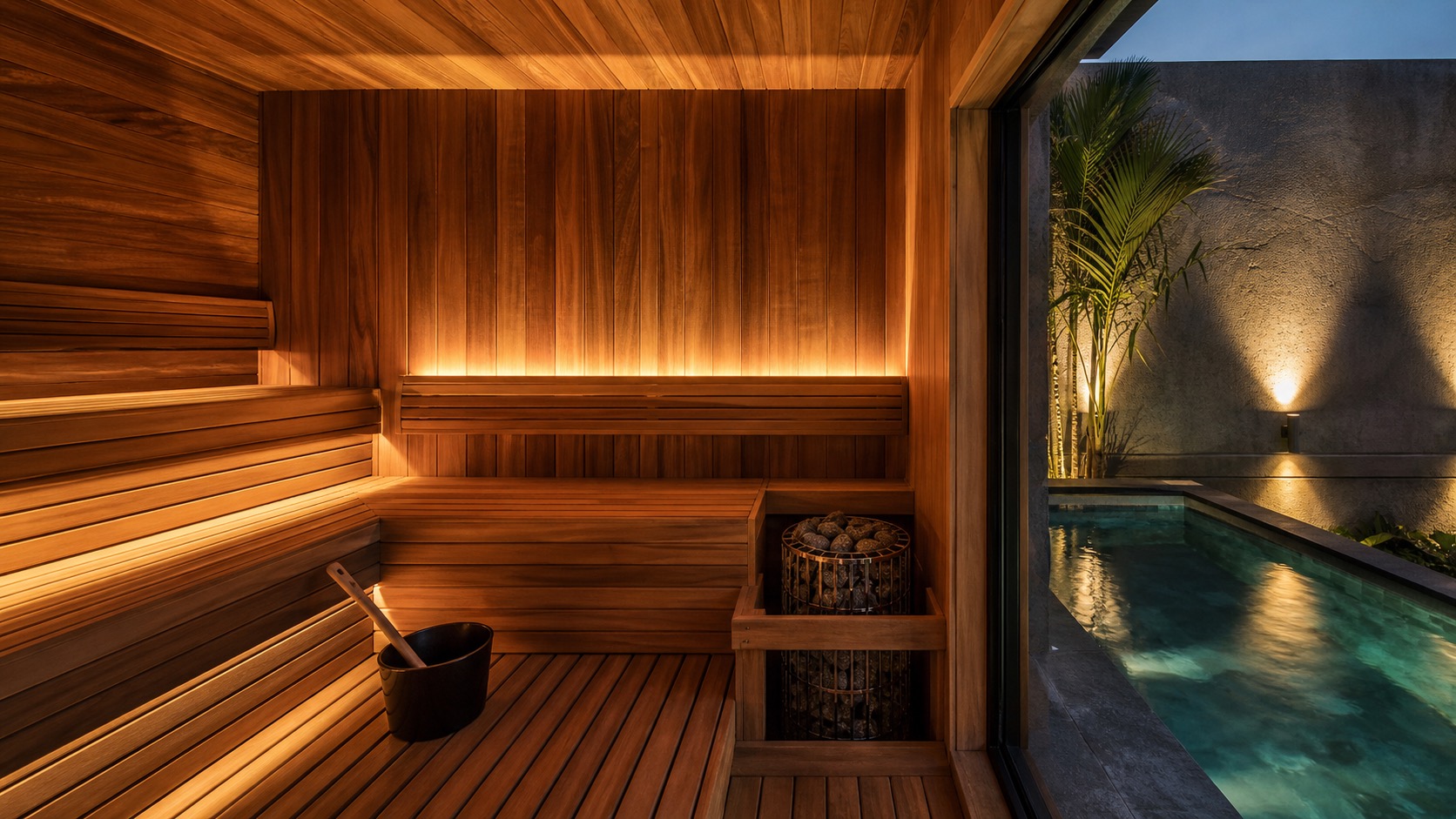
Sauna and contrast therapy have moved from fringe biohacking practice to mainstream wellness tool, and Bali has followed this shift. What was once hard to find on the island is now available at an increasing number of premium gyms and wellness facilities, particularly in Canggu, Uluwatu, and Ubud.
This guide covers what sauna and ice bath therapy actually do, what the evidence says, and how to find quality facilities in Bali.
The Science of Sauna
A traditional sauna typically operates at 80 to 100 degrees Celsius with low humidity, producing heat stress through dry air. Infrared saunas operate at lower temperatures (50 to 60°C) but penetrate tissue differently.
When exposed to heat stress, the body responds with several physiological mechanisms:
Cardiovascular response: Heart rate increases significantly. Cardiac output increases. Blood vessels dilate. The cardiovascular demand of a 20-minute sauna session is roughly equivalent to moderate-intensity exercise.
Heat shock proteins: Heat stress triggers production of heat shock proteins, which support protein integrity, cellular stress resilience, and recovery from exercise-induced muscle damage.
Growth hormone: Acute heat exposure transiently raises growth hormone levels, which supports tissue repair and recovery. Studies using multiple sauna sessions per week have shown meaningful elevations.
Cognitive and mood effects: Regular sauna use is associated with reduced risk of neurodegenerative conditions and improvements in mood markers, possibly through brain-derived neurotrophic factor (BDNF) and thermal conditioning of the nervous system.
Longevity signals: Finnish research following long-term sauna users has associated regular sauna use (four to seven sessions per week) with substantially reduced cardiovascular mortality risk. This is correlational, but the biological mechanisms are plausible.
The Science of Cold Immersion
Ice baths, cold plunges, and cold showers trigger a different and partially complementary set of physiological responses.
Norepinephrine surge: Cold immersion causes a dramatic and sustained rise in norepinephrine — a catecholamine that plays a key role in focus, mood, attention, and energy. Even brief cold water exposure causes increases of several hundred percent that persist for hours.
Brown adipose tissue (BAT) activation: Cold stimulates brown fat, which generates heat through thermogenesis. Regular cold exposure increases brown fat density and metabolic rate.
Inflammation modulation: Cold constricts blood vessels, reduces inflammatory signalling in acute muscle damage contexts, and may reduce post-exercise soreness.
Mental resilience: Cold immersion is genuinely uncomfortable and requires deliberate breathing and psychological regulation. Regular exposure appears to train the nervous system's stress response in ways that generalise to other stressors.
A note on timing and muscle hypertrophy: Cold immediately after strength training may partially blunt hypertrophic signalling. If building muscle mass is the primary goal, separating cold immersion from strength training by several hours or using cold on rest days is commonly recommended.
Sauna and Cold Combined: Contrast Therapy
Alternating heat and cold — sauna followed by cold plunge, repeated two to three times — is called contrast therapy. The alternating vasodilation and vasoconstriction is often described as "pumping" fluid through the body. Some research supports improved recovery from exercise and reduced perceived fatigue. The experience is extremely popular among regular practitioners.
Where to Find Sauna and Ice Baths in Bali
Bali's premium wellness and gym scene has expanded significantly. Facilities that have included thermal recovery infrastructure include premium gyms in Canggu such as Reload Sanctuary, which has developed a comprehensive recovery offering, and Bambu Fitness in the Uluwatu and Bingin area. Nirvana Life in Canggu and Omni Wellness Club in Munggu have also been expanding their recovery facilities. GDas Bali in Ubud offers wellness-focused amenities in a retreat-style setting.
Many high-end villas in Bali's private villa complexes also have outdoor cold plunges.
The landscape is evolving quickly. What was a limited offering two years ago has grown substantially. New wellness facilities are opening and expanding their thermal recovery infrastructure in response to strong demand from Bali's health-conscious community.
Practical Guidance for Using Sauna in Bali
Hydration is critical: Bali is already hot and humid. Sauna in a tropical climate means sweat loss stacks on top of the ambient heat demand. Drink water with electrolytes before, during (at the very least, water), and after each session.
Session length: Beginners should start with 10 to 15 minutes per sauna session. Experienced users typically stay 15 to 20 minutes per session. Multiple rounds with cooling in between is preferable to a single very long session.
Exit signals: Leave the sauna if you feel dizzy, nauseated, or your heart rate becomes uncomfortable. Do not push through significant discomfort. The benefits are dose-dependent but not linear — more is not always better.
Cool down progressively: Going directly from intense sauna heat to a cold plunge is a significant cardiovascular transition. Some people prefer a short ambient cool-down of a few minutes first. Others go directly. Know your tolerance.
Cold Plunge Protocol
- Start with brief exposures: two to three minutes at 10 to 15°C
- Breathe deliberately and calmly; resist the urge to hyperventilate
- Work up to longer exposures as you adapt
- Two to four minutes at cold plunge temperature is sufficient for most physiological benefits
- Exit before shivering becomes uncontrolled
FAQ
Is sauna safe in Bali's hot climate?
Sauna is safe in Bali for healthy individuals who hydrate adequately. The additional ambient heat means your body has less cooling capacity available, so hydration is even more important than in cooler climates. If you have cardiovascular conditions, consult a doctor before using sauna.
Can I do sauna and cold plunge every day?
Many people do, particularly those training regularly. Most evidence and practitioner experience suggests that regular use is well-tolerated. Daily sessions may be particularly useful for athletes with high training loads. Listen to your body and ensure adequate hydration.
Where can I find an ice bath in Canggu?
Several premium gyms in Canggu including Reload Sanctuary have cold plunge facilities. The landscape is expanding. It is worth contacting specific facilities directly to confirm their current thermal recovery offerings, as new facilities are being added.
Does cold immersion reduce muscle soreness?
Cold immersion after exercise can reduce perceived muscle soreness and may reduce some inflammatory markers. Whether it reduces actual muscle damage or simply changes the perception of soreness is debated. It is widely used by athletes for recovery feel-good benefits regardless.
What is the difference between a cold shower and an ice bath?
Cold shower water is typically 20 to 25°C, while a proper cold plunge is typically 10 to 15°C. The physiological response — norepinephrine release, cold shock response — is meaningfully more pronounced at colder temperatures. Cold showers still provide benefit, but the intensity of the cold stimulus matters.
Build Your Recovery Stack in Bali
If you are building a comprehensive recovery approach in Bali — combining thermal therapy with nutrition, supplementation, and targeted recovery protocols — explore our blog for more guides or visit our shop for quality-verified wellness products.
For more advanced recovery support including peptide protocols, book a consultation to discuss your specific goals.
Disclaimer: This article is for educational and informational purposes only. It does not constitute medical advice, diagnosis, or treatment. Individuals with cardiovascular conditions, high blood pressure, or other health concerns should consult a qualified healthcare professional before using sauna or cold immersion therapy.