
Education
TB-500 in Bali: What Are People Using It For?
Published 8 Sept 2026, 21:00 Bali time
TB-500 is often discussed in Bali's wellness and recovery scene. Learn what people are interested in, what the research actually shows, and why TB-500 should not be confused with established medical treatments.
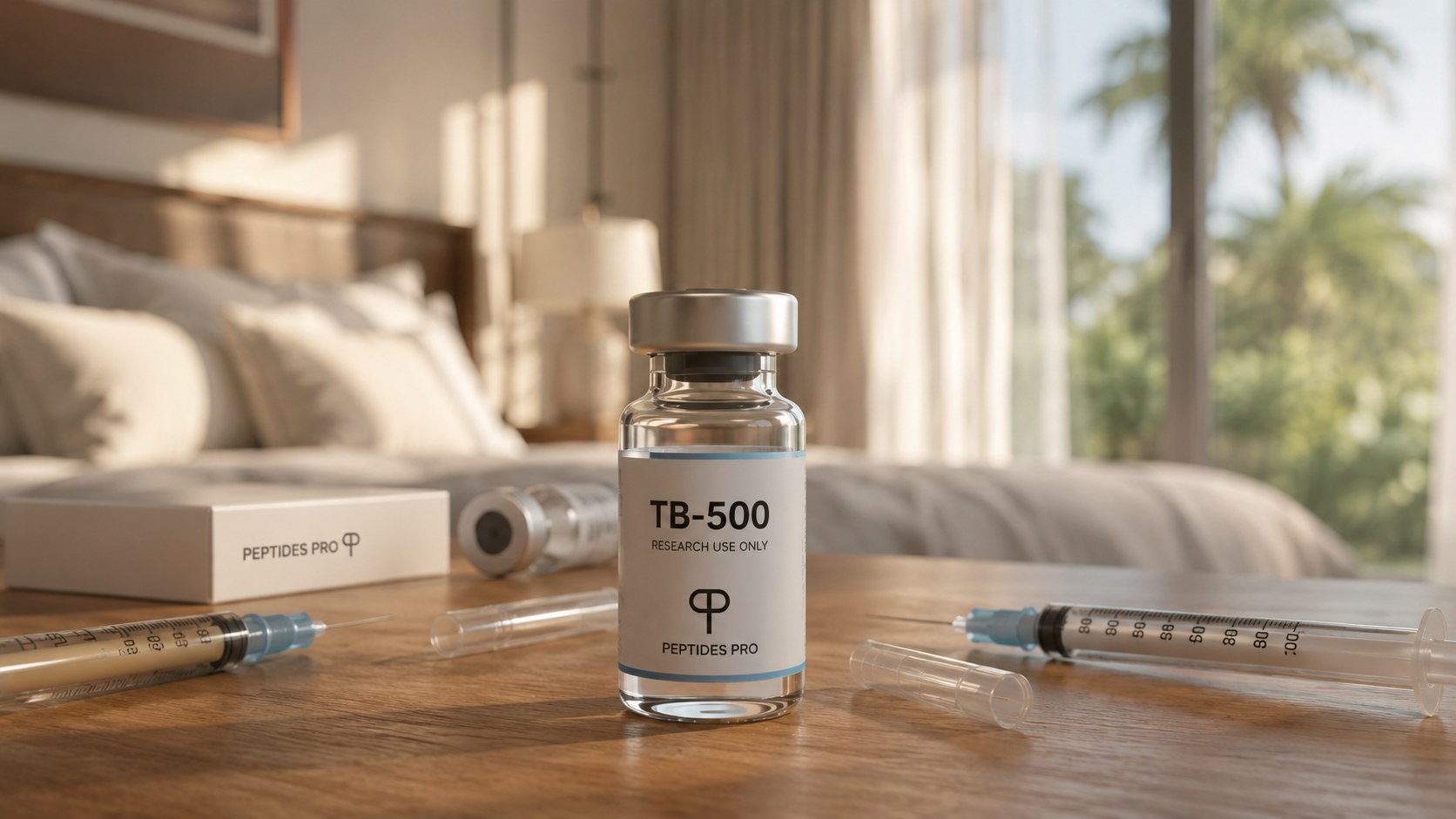
TB-500 has become one of the more recognizable names in the peptide world, particularly among people interested in recovery, sports performance, tissue repair, and longevity.
In Bali, where wellness clinics, recovery centers, fitness communities, and longevity-focused services have become increasingly visible, TB-500 is sometimes discussed alongside other peptides such as BPC-157, GHK-Cu, and MOTS-c.
But there is an important distinction between what people are interested in using TB-500 for and what has actually been established in human research.
TB-500 is commonly described as a thymosin beta-4 fragment. The scientific literature on thymosin beta-4 has explored tissue repair, wound healing, cell migration, angiogenesis, inflammation, and regeneration. However, that does not mean that every claim made about TB-500 itself has been demonstrated in human clinical trials.
That difference is especially important for anyone encountering TB-500 through the growing peptide and wellness scene in Bali.
What Is TB-500?
TB-500 is commonly identified as the N-terminally acetylated 17–23 fragment of thymosin beta-4. The FDA's substance database lists TB-500 under this identity, while also noting that the existence of a substance listing does not mean it has undergone regulatory approval. :contentReference[oaicite:0]{index=0}
This is where some confusion begins.
TB-500 and full-length thymosin beta-4 are related, but they are not automatically interchangeable.
Thymosin beta-4 is a naturally occurring peptide found in the human body and has been studied extensively in laboratory and clinical research. Researchers have investigated its role in processes including cell migration, tissue repair, angiogenesis, inflammation, and wound healing. :contentReference[oaicite:1]{index=1}
TB-500, meanwhile, is generally discussed as a fragment rather than the complete thymosin beta-4 molecule.
That distinction matters because evidence for full-length thymosin beta-4 should not automatically be presented as evidence that TB-500 produces the same effects in humans.
Why Is TB-500 Popular in Bali?
The interest surrounding TB-500 fits into a much larger trend.
Bali has developed a strong wellness ecosystem involving fitness, recovery, biohacking, longevity, aesthetics, and preventative-health services. This environment naturally attracts interest in emerging compounds that are discussed online as potential tools for recovery or tissue support.
TB-500 is particularly appealing because its reputation is built around the idea of repair and recovery.
People discussing the peptide commonly associate it with areas such as:
- Exercise recovery
- Muscle and soft-tissue recovery
- Tendon and ligament concerns
- General tissue-repair research
- Wound-healing research
- Mobility and recovery after physical stress
- Sports and performance communities
Some peptide retailers and wellness businesses in Bali also market TB-500 specifically around recovery and tissue-repair research. :contentReference[oaicite:2]{index=2}
However, marketing language should not be confused with clinical evidence.
What Are People Actually Interested in Using TB-500 For?
1. Recovery After Exercise
One of the biggest reasons TB-500 attracts attention is its association with physical recovery.
People involved in bodybuilding, strength training, running, combat sports, and other physically demanding activities often look for ways to support recovery after repeated muscular or connective-tissue stress.
This is one reason TB-500 appears frequently in online discussions surrounding sports recovery.
But there is an important caveat: there is not enough high-quality human evidence to conclude that TB-500 improves athletic recovery.
The reputation of the peptide comes largely from its relationship to thymosin beta-4 biology and preclinical research rather than robust clinical trials of TB-500 itself.
2. Tendon and Ligament Research
Tendons and ligaments can be particularly slow to recover from injury, which helps explain why peptides associated with tissue repair attract attention from athletes and fitness communities.
Thymosin beta-4 research has investigated mechanisms involved in tissue repair and regeneration, including cell migration and blood-vessel formation. :contentReference[oaicite:3]{index=3}
This has contributed to the broader idea that thymosin beta-4-related compounds may have applications in musculoskeletal recovery.
But again, research interest is not the same thing as proven treatment effectiveness.
A person with a tendon or ligament injury should not assume that TB-500 can replace diagnosis, physiotherapy, rehabilitation, or established medical treatment.
3. Wound-Healing Research
Wound healing is one of the most scientifically interesting areas surrounding thymosin beta-4.
Research has investigated its involvement in processes such as cell migration, angiogenesis, inflammation, and tissue remodeling. Some preclinical models have shown effects on wound repair, while clinical research has also examined full-length thymosin beta-4 in certain wound-related settings. :contentReference[oaicite:4]{index=4}
This is probably one of the strongest scientific reasons the TB-500 name became associated with "repair."
But the distinction remains important:
Evidence involving thymosin beta-4 does not automatically establish the safety or effectiveness of TB-500.
That is a mistake frequently made in peptide marketing.
4. General Tissue-Repair Interest
Another reason people talk about TB-500 is the broader concept of tissue regeneration.
Thymosin beta-4 has been investigated for its biological effects on several processes involved in tissue repair, including cell migration and regeneration. :contentReference[oaicite:5]{index=5}
This has led to TB-500 being discussed in connection with muscles, connective tissue, skin, and other forms of recovery.
However, phrases such as "regenerative peptide" can sound much more definitive than the science actually is.
Research into a biological mechanism does not mean a peptide has been proven to regenerate damaged human tissue in a clinically meaningful way.
TB-500 vs. Thymosin Beta-4: Why the Difference Matters
This is one of the most important things to understand before researching TB-500.
Thymosin beta-4 is a naturally occurring peptide that has been studied in humans.
Researchers have investigated full-length thymosin beta-4 in areas including wound healing and tissue repair, with some clinical studies exploring its safety and potential effects. :contentReference[oaicite:6]{index=6}
TB-500 is a fragment associated with thymosin beta-4.
The problem is that people sometimes take research involving the full molecule and use it to support broad claims about TB-500.
That is scientifically weak.
A study involving thymosin beta-4 should not automatically be described as a study proving that TB-500 works in humans.
This distinction is especially important when evaluating peptide clinics, online vendors, or social-media claims.
Is TB-500 FDA Approved?
TB-500 should not be presented as an FDA-approved treatment.
In a recent FDA review, the agency stated that it had not found articles in which TB-500 was administered to humans and noted a lack of human exposure data for drug products containing the thymosin beta-4 fragment. The FDA also raised concerns regarding potential immunogenicity, aggregation, and peptide-related impurities. :contentReference[oaicite:7]{index=7}
In July 2026, the FDA also considered whether TB-500 free base and TB-500 acetate should be included on the 503A bulk drug substance list and proposed that neither should be included. :contentReference[oaicite:8]{index=8}
That does not mean every discussion of TB-500 is automatically illegitimate.
It means consumers should understand its regulatory and evidence status before treating it like an established medication.
Is TB-500 Legal or Available in Bali?
Availability and legality are not the same question.
A peptide may be advertised, sold, or discussed by a wellness business without that meaning it has been approved as a medicine for a particular use.
This is particularly important in Bali because the wellness market includes businesses operating across different categories, from clinics and medical services to research-oriented peptide suppliers.
If a business offers TB-500, consumers should ask basic questions:
What exactly is the product?
Is it intended for human use?
Who is responsible for the medical assessment?
What testing or quality documentation is available?
What regulatory approval applies to the product and its intended use?
These questions are often more valuable than simply asking whether a peptide is "popular."
What About Athletes?
This is an area people should take especially seriously.
The World Anti-Doping Agency (WADA) lists thymosin-β4 and its derivatives, including TB-500, among prohibited growth factors and related substances. TB-500 is therefore relevant to athletes subject to anti-doping rules. :contentReference[oaicite:9]{index=9}
For competitive athletes, this can turn peptide experimentation into a completely different issue.
A substance being discussed as a recovery peptide online does not mean it is permitted in sport.
Athletes should always check the current prohibited list and their sport's applicable anti-doping rules before using any substance.
Why Do People Confuse TB-500 With BPC-157?
TB-500 and BPC-157 are frequently discussed together online because both have developed reputations as "recovery peptides."
But they are different compounds.
Their proposed mechanisms, research histories, and evidence bases are not identical.
The fact that both appear on peptide websites or in discussions about recovery does not mean they work in the same way or have comparable clinical evidence.
This is another reason consumers should evaluate each peptide individually rather than treating "peptides for recovery" as one category.
What Does the Research Actually Tell Us?
The most responsible way to describe TB-500 is to separate biological research, preclinical research, human research, and marketing claims.
There is substantial scientific interest in thymosin beta-4 biology.
Research has examined its involvement in wound repair, angiogenesis, cell migration, inflammation, and tissue regeneration. :contentReference[oaicite:10]{index=10}
There have also been human studies involving thymosin beta-4, including research into wound-related applications. :contentReference[oaicite:11]{index=11}
But the evidence should not be stretched beyond what the studies actually investigated.
For TB-500 specifically, the human evidence is much more limited. The FDA's recent assessment highlights the lack of identified human administration data for TB-500 products. :contentReference[oaicite:12]{index=12}
That makes it difficult to confidently answer questions such as:
- Does TB-500 accelerate recovery in humans?
- Does it repair tendons faster?
- Does it increase muscle recovery?
- Does it improve athletic performance?
- Does it reduce injury recovery time?
- What are the long-term risks?
At present, those questions cannot be answered with the same confidence we would expect from an established, well-studied medicine.
What Should Someone in Bali Ask Before Considering TB-500?
If you encounter TB-500 at a Bali clinic, wellness business, or peptide supplier, don't focus only on the price or the claims.
Start with the basics.
Ask what compound you are actually being offered
The name "TB-500" can be used casually online, while the scientific identity and formulation may be more complicated.
A reputable provider should be able to clearly explain what the product contains.
Ask about the evidence
A good question is:
"What human clinical evidence supports this specific product?"
Not:
"What does thymosin beta-4 research say?"
Those are different questions.
Ask about quality testing
If a product is being presented as a research compound, ask what independent testing or analytical documentation exists.
A certificate of analysis can provide useful information about identity and purity, but it does not prove that a product is safe or approved for human use.
Ask who is responsible for medical care
If you have an actual injury, persistent pain, or a medical condition, the important question is not simply whether a peptide is available.
The important question is whether the underlying problem has been properly assessed.
TB-500 in Bali: The Bigger Picture
Bali's growing wellness industry has created an environment where emerging peptides can quickly become part of conversations about recovery, longevity, fitness, and performance.
TB-500 is a good example of why consumers need to look beyond the marketing.
Its popularity is understandable.
The biology of thymosin beta-4 is genuinely interesting, and research has explored mechanisms that are highly relevant to tissue repair and regeneration. :contentReference[oaicite:13]{index=13}
But interesting biology is not the same thing as a proven treatment.
For TB-500 specifically, the gap between online reputation and human clinical evidence remains important.
That does not make the science uninteresting.
It makes careful interpretation even more important.
Final Takeaway
TB-500 is mainly discussed in Bali's peptide and wellness scene in connection with recovery, tissue repair, wound-healing research, and physical performance.
Those interests are partly rooted in research surrounding thymosin beta-4, a naturally occurring peptide that has been investigated for its role in tissue repair and regeneration.
However, TB-500 itself should not be treated as if it has the same evidence base as an approved medication.
The most important distinction is simple:
Thymosin beta-4 research is not automatically TB-500 research.
For anyone researching TB-500 in Bali, the smartest approach is to separate scientific evidence from marketing claims, understand the regulatory status, ask about product quality, and involve an appropriately qualified medical professional when there is an actual health concern.
TB-500 may be one of the more talked-about recovery peptides, but its popularity should not be mistaken for proof.
Medical & Research Disclaimer
This article is for educational and informational purposes only. It is not medical advice and does not recommend the use, purchase, or administration of TB-500 or any other peptide. TB-500 is a research compound and should not be assumed to be approved or established as a treatment for any medical condition. Research involving thymosin beta-4 should not automatically be interpreted as evidence that TB-500 has the same effects in humans. Anyone considering a peptide for a medical or recovery-related purpose should speak with a qualified healthcare professional.