
Education
The Scientists Who Shaped Peptide Research: A Short History
Published 7 Jun 2026, 18:34 Bali time
From Emil Fischer coining the word 'peptide' in 1902 to the Nobel Prize-winning discoveries that followed, learn about the scientists whose work made modern peptide science possible.
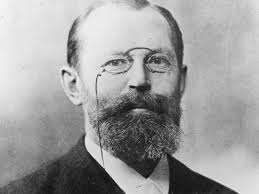
When someone in a Bali gym talks about BPC-157 or Semaglutide, the conversation usually stays practical. Goals, dosages, results. What rarely comes up is the century-long chain of scientific breakthroughs that made any of it possible. The peptides people are using today trace directly back to a handful of remarkable scientists who spent their lives trying to understand what the body is made of and how it communicates with itself. Here is a short history of the people who built the foundation.
Emil Fischer: The Man Who Gave Peptides Their Name
Every field has a founding moment. For peptide science, it belongs to Emil Fischer.
Fischer was a German organic chemist who spent decades trying to understand the chemistry of proteins. In 1901, working with his colleague Ernest Fourneau, he synthesised the first ever dipeptide: glycyl-glycine. It was a small molecule made of just two amino acids joined together, but it was the first time anyone had deliberately constructed what we now recognise as a peptide.
A year later, in 1902, Fischer stood before a meeting of German scientists and physicians and introduced the word "peptide" to describe these linked chains of amino acids. That word, and the concept behind it, became the organising idea for an entire field of science.
Fischer had already won the Nobel Prize in Chemistry in 1902, though for earlier work on sugars and purines. His peptide work came later and was arguably even more significant. He proposed the peptide bond, established that amino acids are the core building blocks of proteins, and outlined a framework for understanding how these chains might be synthesised and studied. Over the following two decades he continued building longer and longer peptide chains in the laboratory, proving that the structure of proteins was something that could be understood, and eventually replicated.
Fischer described what he was doing as "knocking at the door of life." He was not wrong.
Ivan Pavlov: Digestion, Signals, and the Body's Chemical Messengers
Ivan Pavlov is most famous for his experiments with dogs and conditioned reflexes, but his actual Nobel Prize, awarded in 1904, was for something more directly relevant to peptide science: his work on the physiology of digestion.
Pavlov spent years studying how the digestive system works, using dogs fitted with surgical preparations that allowed him to observe gastric secretions in real time without disturbing normal function. What he discovered was that the body does not simply respond to food mechanically. It responds in anticipation. It sends signals. The nervous system and the digestive system are in constant communication.
What Pavlov could not have known at the time was how much of that communication would later turn out to be driven by peptides. His work laid the physiological framework that, within a few years of his Nobel Prize, would lead directly to the discovery of secretin, the first peptide hormone ever identified. Secretin, a gut peptide that signals the pancreas to release digestive enzymes, was the first proof that the body uses chemical messengers to coordinate its systems. Pavlov's experimental foundation made that discovery possible.
His legacy in peptide science is one of groundwork. He helped establish the question that peptide hormones would eventually answer.
Frederick Sanger: Reading the Sequence of Insulin
By the 1940s, scientists knew that insulin, a compound extracted from the pancreas, could keep diabetics alive. What they did not know was its exact structure. Frederick Sanger, a British biochemist, decided to find out.
Over several years, Sanger developed new chemical techniques for breaking proteins apart and identifying the sequence of amino acids within them. In 1951 he published the complete amino acid sequence of insulin, the first protein ever to have its structure fully decoded. It had two chains: one of 21 amino acids and one of 30, connected in a precise arrangement. This was the first time anyone had read the chemical sentence of a protein from beginning to end.
Sanger was awarded the Nobel Prize in Chemistry in 1958 for this work. His methods became the template for protein sequencing that followed, and his demonstration that proteins have a precise, readable structure was a pivotal moment for the entire field.
Vincent du Vigneaud: The First Synthesised Peptide Hormone
If Sanger read the structure of a peptide, du Vigneaud wrote one from scratch.
Vincent du Vigneaud was an American biochemist with a particular interest in sulphur-containing peptides and hormones. In 1953 he successfully synthesised oxytocin, a nine-amino-acid peptide hormone produced naturally in the brain. Oxytocin plays a role in childbirth, bonding, and social behaviour. Du Vigneaud was the first person to build a biologically active peptide hormone in a laboratory, confirming its structure by showing that his synthetic version was indistinguishable from the natural one.
He was awarded the Nobel Prize in Chemistry in 1955. His work demonstrated something profound: that the body's own chemical signals could be reproduced artificially. This was the conceptual foundation on which modern peptide therapeutics are built.
Linus Pauling: Understanding How Peptide Chains Fold
Linus Pauling approached peptide science from a structural angle. In 1951, working with Robert Corey and Herman Branson, he described the alpha helix and the beta sheet, the two primary ways that peptide chains fold in three-dimensional space. Pauling made his initial breakthrough while lying in bed with a cold, drawing a polypeptide chain on a strip of paper and folding it by hand until the geometry worked.
His insight was that the peptide bond is planar and rigid, which constrains how a chain can fold. From this, he built models that accurately predicted the shapes of real proteins. The alpha helix in particular turned out to be one of the most common structural motifs in biology.
Pauling received the Nobel Prize in Chemistry in 1954. His structural work gave scientists a new way to think about peptides: not just as sequences of amino acids, but as three-dimensional shapes whose form determines their function.
Roger Guillemin and Andrew Schally: The Brain's Peptide Messengers
In the 1960s and 1970s, two scientists on opposite sides of an intense scientific rivalry were both working on the same question: does the brain release peptide hormones that control the rest of the endocrine system?
Roger Guillemin, working at the Salk Institute in California with millions of fragments of sheep hypothalamus, and Andrew Schally, working at Tulane University with the same amount of material from pigs, were racing to isolate and identify the same releasing hormones. Their work was painstaking, competitive, and ultimately parallel. Both groups isolated and characterised thyrotropin-releasing hormone (TRH), and both went on to identify other hypothalamic peptides that regulate growth, reproduction, and metabolism.
Their discoveries revealed that the brain is not only an electrical organ but a peptide-secreting one, using hormones to communicate with glands throughout the body. Guillemin and Schally shared the Nobel Prize in Physiology or Medicine in 1977.
Robert Bruce Merrifield: The Method That Changed Everything
All of the scientists above worked with naturally occurring peptides or built them using slow, labour-intensive techniques. In 1963, Robert Bruce Merrifield changed the economics of peptide science entirely.
Merrifield invented solid-phase peptide synthesis (SPPS), a method for building peptide chains by attaching amino acids one by one to a solid resin bead, allowing for far faster and more efficient synthesis than anything previously possible. What once took months could now be done in days. What was once limited by the complexity of the chemistry could now be scaled.
Merrifield was awarded the Nobel Prize in Chemistry in 1984. His method became the basis for the commercial production of most synthetic peptides used in research, medicine, and wellness today. Without it, the peptides that people in Bali and around the world are using now would simply not be accessible.
From the Laboratory to Bali
The peptides that are researched today for recovery, skin health, metabolic function, sleep, and performance are not new ideas. They are the downstream result of over a century of scientific work, built on discoveries made by people who often did not know exactly where their research would lead.
Understanding that history does not change how peptides work. But it does change how you think about them. These are serious compounds with serious science behind them. That is exactly why they deserve to be approached seriously, with quality products, proper testing, and professional guidance.
If you want to understand more about how specific peptides may be relevant for your goals, our team is here to help.
Book a Consultation or Order on WhatsApp to get started.
You can also read our beginner guide to peptides or explore our product range.
FAQ
Who coined the word "peptide"?
Emil Fischer introduced the term "peptide" in 1902 at a meeting of German scientists and physicians in Karlsbad. He had just synthesised the first dipeptide in the laboratory the previous year.
Which scientist first synthesised a peptide hormone?
Vincent du Vigneaud synthesised oxytocin in 1953, making it the first peptide hormone ever produced in a laboratory. He was awarded the Nobel Prize in Chemistry in 1955 for this achievement.
What does Pavlov have to do with peptides?
Pavlov's work on digestive physiology established the framework that led to the discovery of the first peptide hormones, particularly secretin. His research demonstrated that the body uses chemical signals to coordinate its systems, which is the core principle behind peptide biology.
Why is Frederick Sanger significant to peptide science?
Sanger was the first person to determine the full amino acid sequence of a protein, sequencing insulin in 1951. His methods established how to read and understand the structure of peptides and proteins at a molecular level.
What is solid-phase peptide synthesis and why does it matter?
Solid-phase peptide synthesis (SPPS) is a method developed by Robert Bruce Merrifield in 1963 that made it possible to build synthetic peptides quickly and efficiently. It is the manufacturing foundation behind the commercial peptides available today.
Are there new discoveries still being made in peptide science?
Absolutely. Peptide science is one of the most active areas of biomedical research. New peptides are being identified, studied, and developed into therapeutics continuously. The GLP-1 class of peptides, including Semaglutide, is a recent example of how ongoing research translates into practical applications.
This article is for educational purposes only and does not replace medical advice, diagnosis, or treatment from a licensed healthcare professional. Product availability, suitability, and use should be confirmed through consultation and appropriate professional guidance.