
Education
Tirzepatide vs BPC-157 in Bali: Why One Is a Medicine and the Other Isn't
Published 24 Sept 2026, 21:00 Bali time
Tirzepatide has BPOM approval in Indonesia, while BPC-157 remains experimental. Discover what the regulatory difference means for peptide safety in Bali.
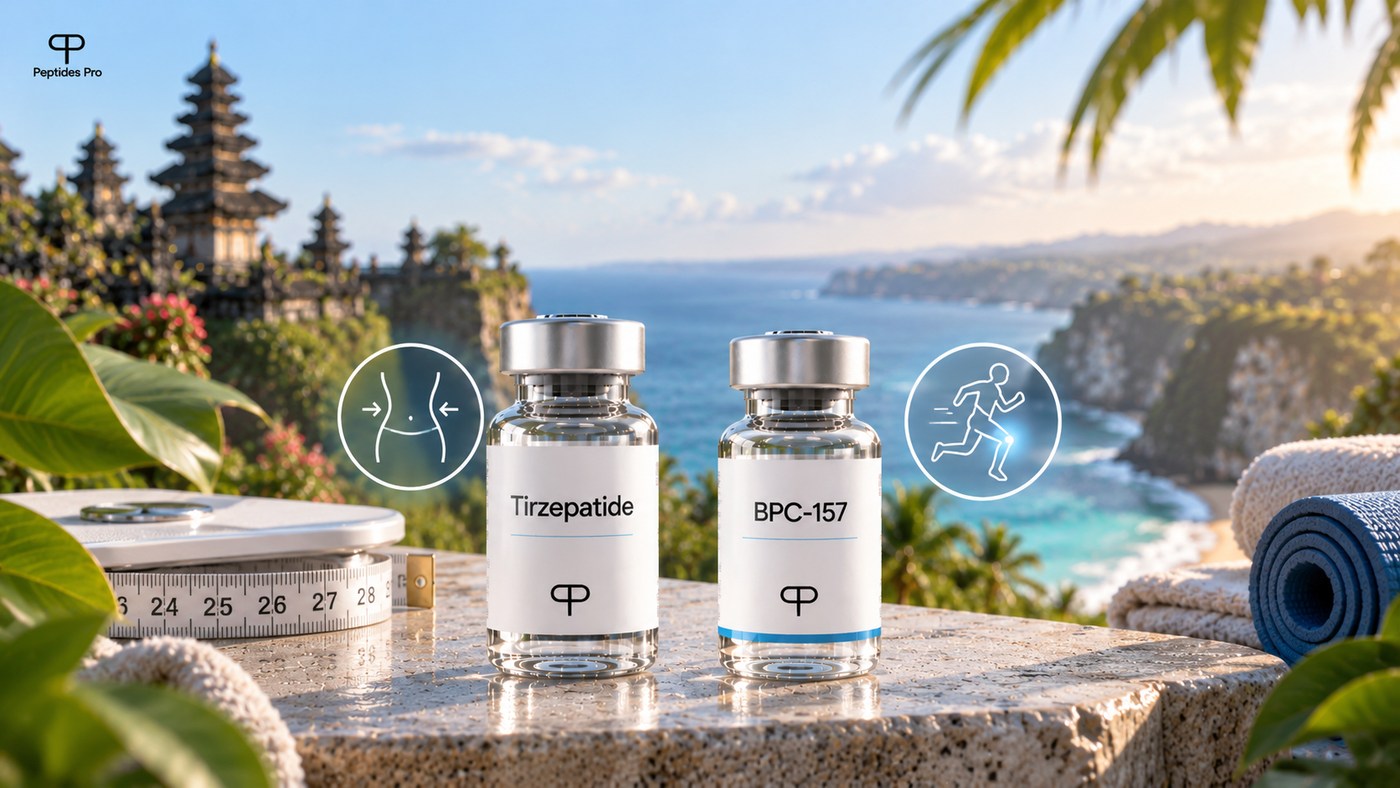
Two injectable peptides can appear in the same Bali wellness conversation while occupying completely different positions in the medical system.
Tirzepatide is an established prescription medicine. Indonesia's National Agency of Drug and Food Control, known as BPOM, approved it for type 2 diabetes in February 2026 and subsequently authorised an additional indication for weight management in July.
BPC-157 is different. Despite growing interest in its potential for injury recovery and gastrointestinal conditions, it remains an experimental peptide without an established, approved therapeutic indication.
The distinction is not simply that one compound is more familiar to doctors or has been studied for longer.
One has undergone clinical development and received regulatory authorisation for defined medical uses in Indonesia. The other has not demonstrated the human clinical evidence needed to establish it as an approved treatment.
For people living in Bali, that difference affects how products should be evaluated, what medical claims are supported, and how much confidence patients can place in their safety information.
It also exposes a common misunderstanding in the peptide market: being injectable, biologically active or available through a clinic does not automatically make a substance an approved medicine.
The short answer: What is the difference between tirzepatide and BPC-157 in Bali?
Tirzepatide has received Indonesian marketing authorisation for defined medical indications. BPOM has publicly confirmed its approval for type 2 diabetes and weight management.
BPC-157 remains an investigational substance. Its proposed benefits are supported primarily by preclinical research, and its effectiveness and safety have not been established through adequately controlled human trials.
A review of the official Indonesian regulatory sources available for this article did not identify a BPOM marketing authorisation for a BPC-157 medicine.
That is not the same as establishing that every possible activity involving BPC-157 is illegal. Research, importation, product registration and therapeutic use are separate regulatory questions.
The important distinction is that BPC-157 should not be represented as a BPOM-approved treatment without a verifiable authorisation.
Here is how the two compounds compare.
| Question | Tirzepatide | BPC-157 |
|---|---|---|
| What is it? | Dual GIP and GLP-1 receptor agonist | Synthetic peptide containing 15 amino acids |
| Indonesian regulatory status | BPOM-authorised medicine | No BPOM-approved medicine identified in the official sources reviewed |
| Approved Indonesian indications | Type 2 diabetes and weight management, subject to product labelling | No established approved therapeutic indication |
| Human clinical evidence | Large randomised controlled trials | A small number of uncontrolled human studies |
| Evidence for effectiveness | Established for defined indications | Not established for proposed therapeutic uses |
| Human safety information | Extensive trial data and ongoing pharmacovigilance | Substantial gaps remain |
| Appropriate clinical context | Prescription treatment under medical supervision | Experimental research rather than an established treatment |
Sources: BPOM's July 2026 tirzepatide announcement, BPOM's product registration records, and the FDA's BPC-157 scientific evaluation.
1. Tirzepatide has an identifiable regulatory history in Indonesia
The most important development for anyone researching tirzepatide in Bali occurred in 2026.
In an official announcement dated 4 July 2026, BPOM confirmed that tirzepatide had received Indonesian marketing authorisation in February for the treatment of type 2 diabetes.
In July, the regulator approved an additional indication for weight management.
The announcement accompanied the Indonesian launch of a tirzepatide-containing product distributed through PT Anugerah Pharmindo Lestari.
This is important because discussions about peptide approval often rely on American or European regulatory decisions.
Those decisions do not automatically establish a medicine's status in Indonesia.
In this case, however, the Indonesian regulator itself confirmed the authorisation.
The approval is also visible in BPOM's medicinal-product registration records.
For example, the regulator's database identifies Mounjaro KwikPen, containing tirzepatide, under marketing authorisation number DKI2688803643A1.
The registration record shows an original approval dated 11 February 2026 and an additional weight-management indication dated 2 July 2026.
These dates establish a traceable Indonesian regulatory history.
They do not mean that every product advertised as tirzepatide has been approved.
The authorisation belongs to a specific registered medicinal product and its approved particulars, not automatically to every vial, compounded preparation or research-labelled product containing the same active ingredient.
2. What has tirzepatide actually been approved to treat?
Tirzepatide is a dual receptor agonist acting on two hormone pathways:
- Glucose-dependent insulinotropic polypeptide, or GIP.
- Glucagon-like peptide-1, or GLP-1.
Both hormones are involved in metabolic regulation.
Tirzepatide can increase glucose-dependent insulin secretion, influence glucagon release and slow gastric emptying.
Its effects on appetite and energy intake also contribute to the weight changes observed in clinical trials.
BPOM's July 2026 announcement identified type 2 diabetes and weight management as its authorised therapeutic areas in Indonesia.
That does not mean tirzepatide is approved for every purpose associated with weight loss, fitness or wellness.
A medicine's approved indication is defined by its registered product information, including the relevant patient population and prescribing requirements.
For someone in Bali considering treatment, the distinction between an approved medical indication and a clinic's broader wellness claims is worth understanding.
A person seeking treatment for obesity, for example, is not automatically equivalent to someone wanting to lose a small amount of weight for cosmetic reasons.
The medicine's authorisation must be interpreted according to its actual Indonesian product information.
3. Tirzepatide's approval is supported by large human clinical trials
The regulatory difference becomes clearer when looking at the research.
One of the major studies supporting tirzepatide's clinical development was SURMOUNT-1, published in the New England Journal of Medicine in 2022.
The study enrolled 2,539 adults with obesity, or overweight accompanied by at least one weight-related complication.
Participants did not have diabetes.
They were randomly assigned to tirzepatide or placebo and followed for 72 weeks.
The study was double-blind, meaning neither participants nor investigators knew which treatment each participant had been assigned during the blinded trial.
At week 72, mean body-weight changes in the tirzepatide groups ranged from approximately 15% to 20.9%, compared with 3.1% in the placebo group.
The trial also evaluated adverse events and treatment discontinuation.
These results do not guarantee that an individual patient will experience the same outcome.
They demonstrate something more fundamental: researchers were able to compare tirzepatide against a control group in a large human population using predefined clinical endpoints.
Why the study design matters
In a randomised controlled trial, researchers can evaluate whether an observed treatment effect differs from what occurs with a comparator.
That provides stronger evidence of causation than simply asking people whether they felt better after taking a compound.
The SURMOUNT-1 trial also documented limitations and adverse effects.
Gastrointestinal reactions were the most common adverse events, generally occurring with mild to moderate severity.
Adverse events led to treatment discontinuation in 4.3% to 7.1% of tirzepatide-treated participants across the study's treatment groups, compared with 2.6% of placebo recipients.
This illustrates an important principle.
A medicine does not become approved because it has no risks. It becomes approved after regulators assess evidence of its benefits, risks and pharmaceutical quality for defined uses.
Source: Jastreboff et al., Tirzepatide Once Weekly for the Treatment of Obesity, NEJM, 2022.
4. BPC-157 has not crossed the same scientific threshold
BPC-157 is a synthetic peptide consisting of 15 amino acids.
It has attracted attention because laboratory and animal studies have investigated its effects on tissue repair, gastrointestinal protection and musculoskeletal injuries.
Some preclinical experiments have reported findings involving tendon healing, blood-vessel formation and cellular responses to injury.
These findings provide reasons to investigate BPC-157 further.
They do not establish that it improves recovery in humans.
A 2026 review published in Pharmaceutics examined BPC-157's pharmaceutical development and clinical evidence.
The authors identified three published human studies involving fewer than 30 participants in total.
None was designed as a randomised controlled trial.
The review concluded that the available evidence was insufficient to support clinical recommendations for any indication.
That is a fundamentally different evidence base from tirzepatide's large clinical-development programme.
Why BPC-157's animal studies are not enough
A compound can influence tissue repair in rats without producing a clinically meaningful benefit in humans.
Animal models differ from human disease in several important ways, including injury characteristics, metabolism and physiological responses.
Even when a biological mechanism appears promising, researchers still need to establish whether the compound produces measurable benefits in people.
For BPC-157, essential questions remain unanswered.
There is no established human treatment response, no reliable long-term safety profile and no adequately controlled clinical evidence demonstrating effectiveness for sports injuries, gastrointestinal disorders or recovery after surgery.
The FDA's scientific evaluation has also identified gaps in pharmaceutical characterisation and safety information.
Source: BPC-157 as an Investigational Peptide Therapeutic, Pharmaceutics, 2026.
For more context, see BPC-157 Use Has Exploded 33-Fold Since 2020.
5. What BPOM approval actually means for patients in Bali
BPOM is Indonesia's national authority responsible for regulating medicines and several other product categories.
Its responsibilities include evaluating medicinal products before marketing authorisation and monitoring their safety after approval.
Bali does not operate a separate medicine-approval system.
A medicine sold in Denpasar, Canggu, Ubud or elsewhere on the island is subject to the applicable Indonesian national regulatory framework.
In its July 2026 announcement, BPOM stated that its medicine evaluation incorporates internationally recognised standards relating to laboratory practices, clinical research and manufacturing quality.
The regulator also explained that medicine safety continues to be monitored after marketing authorisation through pharmacovigilance.
This creates a regulatory distinction between an approved finished medicine and an experimental peptide advertised through commercial channels.
What approval provides
For an authorised product, there is an identifiable regulatory record, approved product information and a framework for monitoring safety.
Clinicians can consult recognised information about the medicine's indications, contraindications and adverse reactions.
The approval does not eliminate every risk.
Rare or unexpected adverse effects may still emerge after a medicine becomes widely used.
However, there is a formal process for collecting and assessing safety information.
For BPC-157, comparable clinical and regulatory information has not been established.
That makes confident claims about predictable human benefits or long-term safety difficult to support.
6. A research peptide label does not establish medical approval
One particularly important issue in Bali's wellness market is the terminology used to describe peptide products.
A substance might be advertised as:
- Research grade.
- Pharmaceutical grade.
- Laboratory tested.
- High purity.
- Research use only.
None of these descriptions independently establishes BPOM marketing authorisation.
A certificate of analysis may provide information about a substance's identity or purity, depending on the tests performed.
It does not demonstrate that the compound has completed clinical trials or received approval for human treatment.
Likewise, a product being supplied in an injectable vial does not establish that its sterility, formulation, manufacturing conditions or clinical safety meet the requirements applicable to an approved medicine.
These distinctions matter for both compounds.
A registered Mounjaro KwikPen and an unregistered vial advertised as tirzepatide should not be assumed to have equivalent regulatory status.
Similarly, BPC-157 being offered by a wellness business does not transform it into an approved medicine.
The relevant questions concern the exact product, its manufacturer, its Indonesian authorisation and the claims being made about its use.
7. Is BPC-157 illegal in Bali?
This question requires more precision than a simple yes or no.
BPC-157 does not have an established BPOM-approved therapeutic indication in the official sources reviewed for this article.
However, the absence of a verified marketing authorisation does not automatically establish the legal status of every possible activity involving the substance.
Importing a chemical for authorised research, conducting an approved clinical trial, selling a product commercially and administering a substance to patients may involve different regulatory requirements.
Indonesia's clinical-trial framework recognises research involving investigational products that have not received marketing authorisation.
BPOM states that pre-marketing clinical trials involving unapproved investigational products require the relevant clinical-trial authorisation, known as Persetujuan Pelaksanaan Uji Klinik (PPUK).
That does not mean a research-labelled product is automatically permitted for routine human treatment.
Nor does it mean a Bali clinic can claim that an experimental peptide is approved simply because it is being supplied commercially.
For any specific product or proposed activity, its regulatory status should be confirmed with BPOM rather than inferred from marketing language.
8. The safety comparison is just as important as the approval comparison
Tirzepatide and BPC-157 differ not only in the strength of their effectiveness evidence but also in how much is known about their risks.
Tirzepatide's clinical trials and prescribing information document gastrointestinal adverse reactions, including nausea, vomiting and diarrhoea.
Its recognised warnings also include acute pancreatitis, gallbladder disease, serious hypersensitivity reactions and kidney injury associated with dehydration.
Hypoglycaemia risk can increase when tirzepatide is used alongside insulin or medicines that stimulate insulin secretion.
The US prescribing information additionally carries a warning about thyroid C-cell tumours observed in rats. Whether the animal finding predicts the same risk in humans remains unknown.
These warnings are not evidence that every patient will experience a serious reaction.
They demonstrate that clinically important risks have been investigated, documented and incorporated into prescribing information.
BPC-157 presents a different problem.
The FDA has identified potential immunogenicity concerns and insufficient human safety information.
Immunogenicity refers to a substance's ability to provoke an immune response.
The agency has also highlighted possible problems involving peptide-related impurities and the characterisation of BPC-157 preparations.
Without adequately controlled human studies, researchers cannot reliably estimate the frequency of important adverse effects or establish long-term safety.
Known risks versus insufficiently characterised risks
| Safety question | Tirzepatide | BPC-157 |
|---|---|---|
| Common adverse reactions | Documented in large human trials | Not reliably characterised |
| Serious adverse-event monitoring | Established clinical and post-marketing systems | Limited human safety information |
| Contraindications | Defined in approved prescribing information | No established approved prescribing information |
| Long-term evidence | Multi-year human trial data available | Substantial gaps |
| Product-quality oversight | Applies to the specific authorised medicine | Depends on product and regulatory context; no approved medicine identified |
The lesson is not that tirzepatide is risk-free.
It is that its risks can be discussed using a much stronger body of human evidence.
For further reading, see When a Peptide Side Effect Becomes a Medical Emergency.
Sources: Mounjaro prescribing information and FDA information on potentially risky compounding substances.
9. How can someone in Bali verify whether a peptide medicine is approved?
For residents and visitors, the most useful starting point is BPOM's official product database.
The regulator operates Cek Produk BPOM, a public system for checking registered products.
Medicinal products can be searched by details such as their name, brand or Indonesian marketing authorisation number, known as the Nomor Izin Edar (NIE).
For tirzepatide, BPOM's official registration records provide identifiable information for Mounjaro KwikPen.
For a product advertised as BPC-157, a seller's claim of approval should not be accepted without a corresponding verifiable authorisation.
Importantly, checking a database record does not by itself authenticate an individual package. Counterfeit products can display genuine registration numbers copied from authorised medicines.
The physical product must still correspond to the registered medicine, including its identity, manufacturer and labelling.
Where to ask questions in Bali
Bali has a local BPOM office in Denpasar.
The Balai Besar Pengawas Obat dan Makanan di Denpasar provides public information and complaint services relating to medicines and other regulated products.
The office is located on Jalan Tjut Nyak Dien No. 5, Panjer, Denpasar.
According to its official public-service information, residents can contact the office through its website, telephone, WhatsApp or in-person services.
This is a useful option when a product's registration status is unclear or when someone encounters questionable claims about a medicine being sold in Bali.
The national BPOM contact centre, HALOBPOM, is another official information channel.
These services can help clarify regulatory questions without relying solely on promotional information from a vendor.
Source: Balai Besar POM di Denpasar: Public information and complaint services.
10. What about tourists bringing peptide products into Bali?
Visitors arriving through I Gusti Ngurah Rai International Airport may already have prescription medicines or products purchased overseas.
However, approval in another country does not automatically establish that a medicine can be imported or supplied in Indonesia without restrictions.
Personal medication, commercial importation and research substances can be subject to different requirements.
The exact position may depend on the medicine, its formulation, its regulatory classification and the purpose of importation.
A product described as a research peptide should not be assumed to qualify for the same treatment as a prescribed, authorised medicine.
For tirzepatide, travellers should establish the requirements applicable to their specific prescribed product before travelling.
For BPC-157, the absence of an established Indonesian marketing authorisation makes it particularly important not to assume that a research-use label or overseas purchase establishes permission to bring it into the country.
This article does not establish a universal import allowance, exemption or prohibition for either substance.
Current requirements should be confirmed with BPOM and the Indonesian customs authorities before travel.
What people often misunderstand about approved and experimental peptides
"If a peptide is available in a Bali clinic, it must be approved"
Not necessarily.
Availability does not establish marketing authorisation.
The regulatory status of the exact product must be verified independently.
"Tirzepatide is approved, so every product containing tirzepatide is approved"
No.
Approval applies to specific registered medicinal products and their authorised particulars.
An unregistered preparation containing the same active ingredient does not automatically acquire the approval status of Mounjaro.
"BPC-157 has animal studies, so it is clinically proven"
No.
Animal research can identify promising biological effects, but it cannot establish human treatment effectiveness or an acceptable safety profile.
"If BPC-157 is not approved, it must have been proven ineffective"
Not necessarily.
Lack of approval is not proof that a compound can never have a useful clinical effect.
For BPC-157, the central problem is that the available human evidence is insufficient to establish effectiveness and safety.
"FDA approval and BPOM approval are interchangeable"
No.
The FDA regulates medicines in the United States, while BPOM is Indonesia's national regulator.
An American regulatory decision does not automatically determine a product's approved status in Bali.
For tirzepatide, Indonesian approval can be verified directly through BPOM.
Frequently Asked Questions
Is tirzepatide approved in Bali?
Yes. BPOM confirmed Indonesian marketing authorisation for tirzepatide in February 2026 for type 2 diabetes, followed by an additional weight-management indication in July 2026.
The authorisation applies to the relevant registered medicinal products, not every preparation advertised as tirzepatide.
Is BPC-157 approved in Indonesia?
No BPOM marketing authorisation for a BPC-157 medicine was identified in the official sources reviewed for this article as of September 2026.
BPC-157 remains experimental, without established clinical effectiveness or safety for its promoted therapeutic uses.
Can a Bali clinic prescribe BPC-157?
The answer depends on the exact product, proposed activity and applicable Indonesian regulatory requirements.
The available evidence does not establish BPC-157 as an approved treatment, and the existence of a clinic offering it does not establish that a particular use is authorised.
BPOM can provide clarification about a specific product or regulatory question.
Is tirzepatide safer than BPC-157?
Tirzepatide has a substantially stronger human safety evidence base, including large clinical trials and established prescribing information.
BPC-157's human safety profile remains inadequately characterised.
This does not mean tirzepatide is free of risk or that the two substances can be compared through a direct safety trial.
They have different proposed uses, mechanisms and stages of clinical development.
Does BPOM approve every peptide medicine?
No.
Regulatory authorisation is assessed for specific medicinal products and indications.
The fact that a substance is a peptide does not determine whether it is approved.
Can BPC-157 be used for injury recovery?
BPC-157 has been investigated in preclinical injury models, but controlled human evidence establishing its effectiveness for injury recovery is lacking.
It should not be described as an established treatment for tendon, ligament or muscle injuries.
How do I check whether a peptide product is registered in Bali?
Use BPOM's official Cek Produk database to search for the product or its marketing authorisation number.
For questions about a specific product, the Balai Besar POM office in Denpasar provides public information and complaint services.
Does an overseas prescription make a peptide legal to import into Bali?
Not automatically.
Indonesia's import requirements are separate from another country's prescribing and marketing-authorisation rules.
Travellers should confirm the requirements applicable to the exact product with the relevant Indonesian authorities before travelling.
The Bottom Line
Tirzepatide and BPC-157 demonstrate why the word "peptide" is not enough to tell someone whether a substance is an established medicine.
Tirzepatide has completed extensive human clinical development and received Indonesian regulatory authorisation for defined medical indications.
Its benefits, limitations and recognised risks can be evaluated using large clinical trials and approved prescribing information.
BPC-157 remains experimental. Its promising preclinical findings have not been translated into sufficiently rigorous human evidence establishing therapeutic effectiveness or long-term safety.
For someone in Bali, the practical distinction is not simply whether a peptide can be found online, purchased from a supplier or discussed in a wellness clinic.
It is whether the exact product has verifiable Indonesian authorisation, whether its proposed use is supported by clinical evidence, and whether its risks are adequately understood.
Tirzepatide has crossed that regulatory threshold for specified medical uses.
BPC-157 has not.
Sources
- Badan Pengawas Obat dan Makanan (BPOM), Indonesia. BPOM Dorong Akses Terapi Inovatif untuk Penanganan Penyakit Metabolik dengan Zat Aktif Tirzepatide. Official press release, 4 July 2026. Confirms Indonesian authorisation for type 2 diabetes in February 2026 and the additional weight-management indication in July. Read the BPOM announcement.
- BPOM Directorate of Drug Registration. Mounjaro KwikPen Assessment and Registration Record. Official product record documenting marketing authorisation and subsequent indication changes. View the registration record.
- Jastreboff AM et al. (2022). Tirzepatide Once Weekly for the Treatment of Obesity. New England Journal of Medicine, 387, 205–216. DOI: 10.1056/NEJMoa2206038. Read the clinical trial.
- BPC-157 as an Investigational Peptide Therapeutic (2026). Biopharmaceutical Challenges, Formulation Strategies, and Translational Development Barriers. Pharmaceutics, 18(5), 625. Reviews BPC-157's limited human evidence and pharmaceutical-development challenges. Read the peer-reviewed review.
- U.S. Food and Drug Administration. Certain Bulk Drug Substances for Use in Compounding That May Present Significant Safety Risks. Explains the FDA's concerns regarding BPC-157, including limited human safety information and potential immunogenicity. Read the FDA safety information.
- Balai Besar POM di Denpasar (2026). Public Information and Complaint Services. Official information about medicine-related enquiries and consumer complaints in Bali. Read the Denpasar BPOM information.
Medical Disclaimer
This article is for educational and research-information purposes only. It does not provide medical advice, diagnosis, treatment recommendations or individual legal advice. Tirzepatide is a prescription medicine with specific approved indications and recognised medical risks. BPC-157 is experimental, and its safety and effectiveness for human therapeutic use have not been established. Regulatory requirements may change. Consult a qualified healthcare professional about personal medical decisions and BPOM or the relevant Indonesian authorities for current product-specific regulatory information.